5 Bizarre Olympic Sports That Actually Happened
Felix Braun ·
Listen to this article~4 min
Explore five truly bizarre sports that were once official Olympic medal events, from live pigeon shooting to solo synchronized swimming. Discover the weird history of the Games.
You know the Olympics, right? The pinnacle of athletic achievement. Running, swimming, gymnastics—the classics. But let me tell you, the Olympic history books hold some truly strange secrets. I'm talking about sports that made it onto the world's biggest stage, only to vanish into obscurity. It makes you wonder who decided these were good ideas.
Today, we're diving into five of the most unusual sports that were once Olympic events. These aren't just niche—they're downright bizarre by today's standards. Grab your coffee, and let's explore the weird and wonderful side of Olympic history.
### Tug of War Was an Olympic Medal Sport
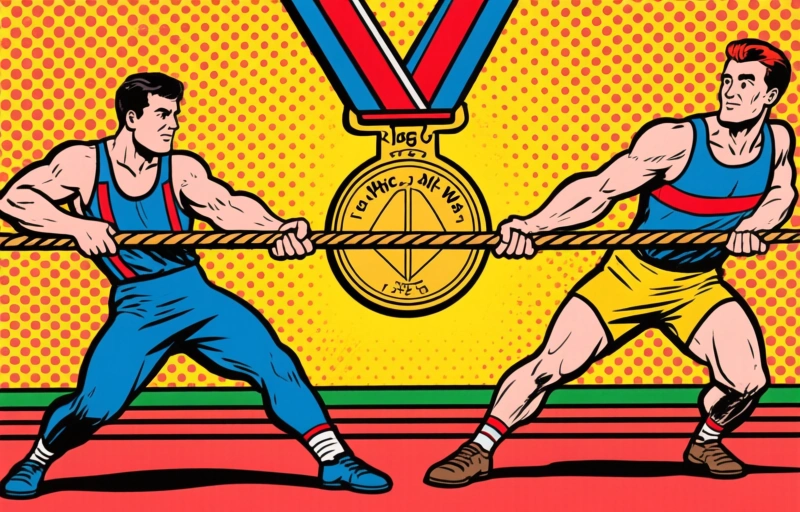
Seriously. From 1900 to 1920, tug of war was a fully-fledged Olympic event. Teams of eight would literally pull for gold. It wasn't just some sideshow either; it was a proper contest with real strategy. Countries like Great Britain, Sweden, and the United States all won medals. Can you imagine the training regimen? It probably involved a lot of... well, pulling on a rope. The event was eventually dropped, deemed not "athletic" enough. But for a while, it was the ultimate test of raw, collective strength.
### Live Pigeon Shooting: Yes, That Happened
This one is hard to believe. At the 1900 Paris Olympics, live pigeon shooting was an event. Competitors shot at live birds released from traps. The winner was the last shooter standing after eliminating 21 pigeons. It was the only time in Olympic history where animals were killed on purpose for a medal. The event was understandably controversial and short-lived. It was replaced by clay pigeon shooting, which is still part of the Games today. A dark and unusual chapter, for sure.
### The Art Competitions: Medals for Painting and Sculpture
From 1912 to 1948, the Olympics awarded medals for art. Pierre de Coubertin, the founder of the modern Games, believed art was integral to the Olympic spirit. Categories included architecture, literature, music, painting, and sculpture—all with themes related to sport. Artists submitted works, and juries awarded gold, silver, and bronze. It blurred the line between physical and creative prowess in a fascinating way.
### Solo Synchronized Swimming
Wait, what? How can you synchronize... by yourself? This was an official event at the 1992 Barcelona Games. Swimmers performed routines alone, judged on their synchronization with the music. It was essentially water ballet. While beautiful, the sheer oddness of a "solo sync" event led to its removal after just one appearance. The team and duet events carried on, but going it alone was a one-Olympic wonder.
### The 200m Obstacle Swim
Picture this: a swimming race where you had to climb over a pole and scramble over a row of boats. That was the 200m obstacle swim at the 1900 Paris Games. It was part of a swimming program held in the Seine River. The obstacles turned it into a chaotic, almost comical spectacle. It was never repeated, likely because it was more about awkward scrambling than pure swimming skill. A true relic of experimental early Olympics.
Here's a quick list of other oddities that briefly graced the Olympic program:
- Rope climbing (gymnastics)
- Club swinging (gymnastics)
- Motorboating (yes, with engines)
- Croquet (1900 only)
It's fascinating to see how the Olympic program has evolved. What we consider a "sport" changes over time. These unusual events remind us that the Games have always been an experiment, a reflection of their era's interests and quirks. Some ideas stick around for centuries, while others... well, they make for great trivia. Next time you watch the Olympics, remember—it could have been weirder. Much weirder.