Cooling Solar Panels: Algorithm Cuts Heat During Clipping
Felix Braun ·
Listen to this article~4 min
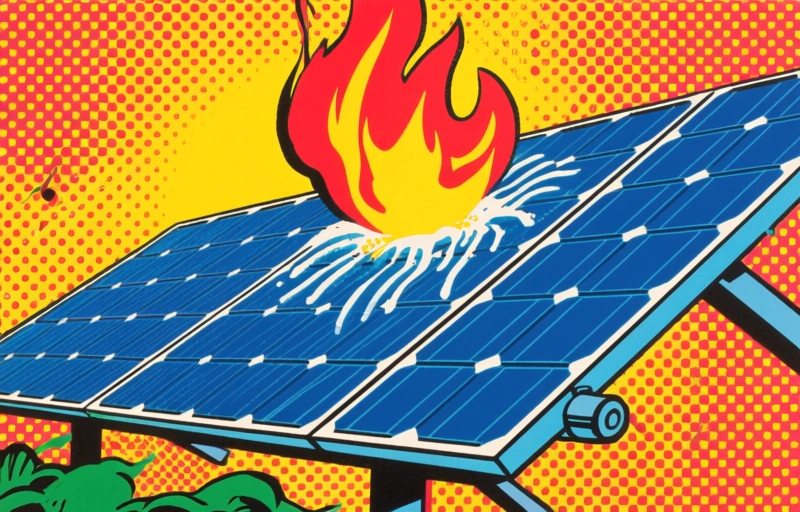
A breakthrough algorithm helps solar panels stay cooler during power clipping events, boosting efficiency and extending equipment lifespan. Discover how smarter power management is changing solar performance.
Let's talk about something that's been quietly cooking in the solar industry. Literally. You know how solar panels can get hot? I mean, they're sitting out in the sun all day, so it makes sense. But here's the thing—when they get too hot, they don't work as well. It's a real efficiency killer.
Now, there's this tricky situation called 'clipping' or 'curtailment.' That's when the inverter can't handle all the power the panels are producing, so it has to, well, clip it. Think of it like trying to pour a gallon of water through a pint-sized funnel. The excess just spills over.
### The Heat Problem Nobody Talks About
Here's where it gets interesting. During clipping, those solar modules don't just stop working—they actually get hotter. It's like they're working hard but going nowhere, and all that energy turns into heat instead of electricity. That extra heat can shorten their lifespan and make them even less efficient.
It's been one of those quiet problems that engineers have been trying to solve for years. Until now.

### A Smarter Way to Manage Power
Researchers have developed a new algorithm that's changing the game. Instead of just cutting off power when there's too much, this smart system manages the flow differently. It's like having a traffic controller for electrons, directing them in ways that keep everything running cooler.
What's really clever is how it works:
- It predicts when clipping is likely to happen
- It adjusts power output gradually, not abruptly
- It maintains optimal temperatures across the entire array
- It extends the life of your solar investment
### Why This Matters for Your Solar Setup
If you're running a solar farm or even just have panels on your roof, this is big news. Cooler panels mean more electricity over the long run. We're talking about real money here—thousands of dollars over the life of a typical residential system.
One solar expert put it perfectly: 'Managing heat isn't just about comfort—it's about cash. Every degree we can shave off those panel temperatures translates directly to better performance and longer equipment life.'
### The Bottom Line for Solar Professionals
This isn't some theoretical lab experiment. Early tests show temperature reductions of 15-20°F during peak clipping events. That might not sound like much, but in solar terms, it's huge. For every 18°F above 77°F, solar panels lose about 1% of their peak power output.
Do the math on that. If your panels are running at 140°F instead of 160°F during a summer afternoon, you're looking at significantly better performance. Over 25 years, that adds up to serious energy production.
### What This Means Going Forward
The beauty of this solution is that it's software-based. No new hardware, no major installations. Just smarter control systems that work with what you already have. It's one of those elegant fixes that makes you wonder why nobody thought of it sooner.
As solar becomes more common and grid management gets more complex, solutions like this will be crucial. They help maximize the return on investment for solar owners while making the entire grid more stable and efficient.
So next time you're looking at solar panels baking in the sun, remember—there are smart people working on keeping them cool. And that's good news for everyone who believes in clean, reliable energy.