Ferrari's Engine Overhaul to Challenge Mercedes' F1 Edge
Felix Braun ·
Listen to this article~4 min
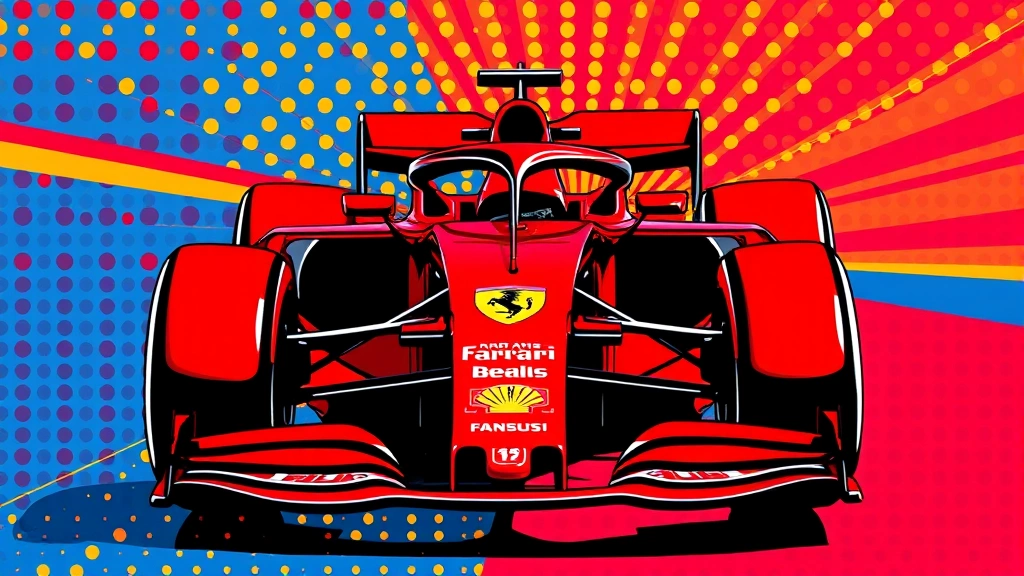
Ferrari is planning a major engine reconfiguration to counter Mercedes' 'super-clipping' energy management advantage in Formula 1, signaling a deep technical duel for future championships.
The Formula 1 arms race never really sleeps, does it? Just when you think the grid is settling into a rhythm, whispers from the paddock signal the next big shift. Right now, that shift is coming from Maranello. Ferrari isn't just tweaking their power unit for the next season—they're reportedly planning a full-scale reconfiguration. The target? To directly counter what's being called Mercedes' 'super-clipping' advantage, a technical edge that's given the Silver Arrows a crucial leg up in energy deployment and race strategy.
It's a fascinating technical duel playing out behind the scenes. While fans watch the on-track battles, engineers are locked in a relentless war of innovation, where a single concept like 'clipping' can define a championship. This isn't about minor upgrades; it's a fundamental rethink to claw back performance in one of the sport's most complex and regulated areas.
### What Exactly Is 'Super-Clipping'?
Let's break it down without the jargon. Think of the hybrid power unit in an F1 car like a sophisticated battery system. It harvests energy under braking (that's the MGU-K) and from exhaust heat (the MGU-H), storing it for a powerful boost. 'Clipping' is essentially a smart way to manage that energy flow to the electric motor. Mercedes' reported 'super-clipping' approach allows them to deploy electrical power more efficiently and for longer durations, especially at critical moments like exiting corners or down straights. It's a software and hardware symphony that maximizes every single joule of energy.
For Ferrari, falling behind in this area means losing tenths of a second per lap—and in F1, that's an eternity. It affects overtaking, defense, and overall race pace. So, a reconfigured engine isn't just about more horsepower; it's about building an entire system optimized to manage and deploy energy as effectively as their rivals.
### The Engineering Challenge Ahead
Reconfiguring an F1 power unit is a monumental task. The regulations are incredibly tight, leaving only narrow windows for performance gains. Ferrari's engineers will be delving into:
- The internal combustion engine's (ICE) architecture for better thermal efficiency.
- The turbocharger and MGU-H integration to improve energy recovery.
- The energy store (battery) and control electronics for more robust deployment.
- The all-important software algorithms that govern the entire process.
It's a holistic approach. You can't just bolt on a new part; everything must work in perfect harmony. The goal is to create a package that not only matches Mercedes' efficiency but does so reliably over a grueling 24-race season. The pressure is immense, but the Scuderia has a history of brilliant engineering comebacks.
### Why This Matters for the 2025 Season
This move signals Ferrari's long-game strategy. They're not looking for a quick fix. By initiating this redesign now, they're laying the groundwork for a power unit that can fight for championships in the coming years. It's an admission that to beat the best, you must innovate in the areas where they excel.
As one insider noted, 'The difference at the front is now measured in the smallest of details. Energy management isn't a side project; it's the project.' This quote really hits the nail on the head. The development race off the track is just as intense as the wheel-to-wheel battles on Sunday.
For us fans, this is what makes F1 so compelling. It's a sport where brilliance is measured in millimeters and milliseconds. Ferrari's response to Mercedes' innovation sets the stage for a fascinating technical rivalry. Will the reconfigured 'Prancing Horse' engine close the gap? Only time and telemetry will tell. But one thing's for sure: the pursuit of every last fraction of performance is what drives this sport forward.