Inside Camp Clarinda: WWII POWs in Iowa Revealed
Emily Taylor ·
Listen to this article~4 min
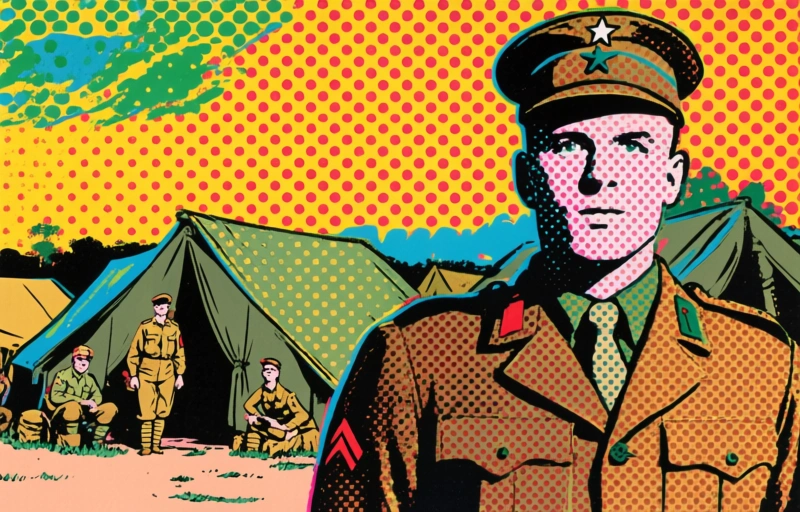
Recently highlighted images reveal the complex story of Japanese and German prisoners of war held at Camp Clarinda in Iowa during WWII, offering a human-scale view of history on the American home front.
You know, sometimes history hides in plain sight. We hear about the big battles, the famous generals, but the smaller, human stories often get lost. Like the fact that during World War II, right in the heart of Iowa, there was a camp holding both Japanese and German prisoners of war. It's a piece of history that feels both distant and incredibly close to home.
Recently surfaced images and records have pulled back the curtain on Camp Clarinda. This wasn't a front-line combat zone, but a carefully managed detention facility that became a temporary home for hundreds of captured soldiers far from the battlefields of Europe and the Pacific.
### The Unexpected Reality of a POW Camp
When you think of a prisoner of war camp, what comes to mind? Probably something stark and grim. But the story of Camp Clarinda is more nuanced. It was one of hundreds of camps across the United States established to house the massive influx of captured Axis soldiers. The goal was secure containment, but also adherence to the Geneva Conventions.
Life inside the fence was a strange mix of regimentation and routine. Prisoners had structured days, meals were provided, and they were even allowed to organize activities. Some worked on local farms, filling labor shortages caused by American men going off to fight. It created a surreal dynamic—former enemies contributing to the local economy of the very nation they were at war with.
### A Glimpse Through the Lens
The real power of this story comes from the photographs. They're not dramatic shots of conflict. Instead, they show everyday moments:
- Groups of men in distinctive uniforms playing sports in a dusty field.
- Prisoners tending to small garden plots within the compound.
- Formal line-ups for roll call under the watch of American guards.
These images strip away the abstraction of "the enemy" and show us individuals—young men caught in a global event, trying to make sense of their circumstances thousands of miles from everything they knew. It’s a powerful reminder of the human scale of history.
As one historian noted, "These camps were microcosms of the war itself, places where ideology, culture, and sheer human endurance collided daily."
### The Legacy of Camp Clarinda
After the war ended, the prisoners were repatriated. Camp Clarinda was dismantled, and the land was repurposed. For decades, its story was a quiet footnote, known mainly to local historians and a few aging residents who remembered seeing the prisoners working in the fields.
But these newly highlighted records do important work. They preserve a complex chapter of both Iowa's and America's wartime experience. They challenge simple narratives and make us consider the full, complicated picture of what total war meant on the home front. It’s history that doesn’t just live in textbooks, but in the very soil of places we drive past every day.
So next time you're in southwest Iowa, maybe you'll look at the landscape a little differently. Knowing that for a few years in the 1940s, it was a place where the world's conflict came to rest, and where an unusual kind of peace was maintained behind barbed wire.