Sport Climbing Fall Leads to Thumb Amputation: The Hidden…
Emily Taylor ·
Listen to this article~4 min
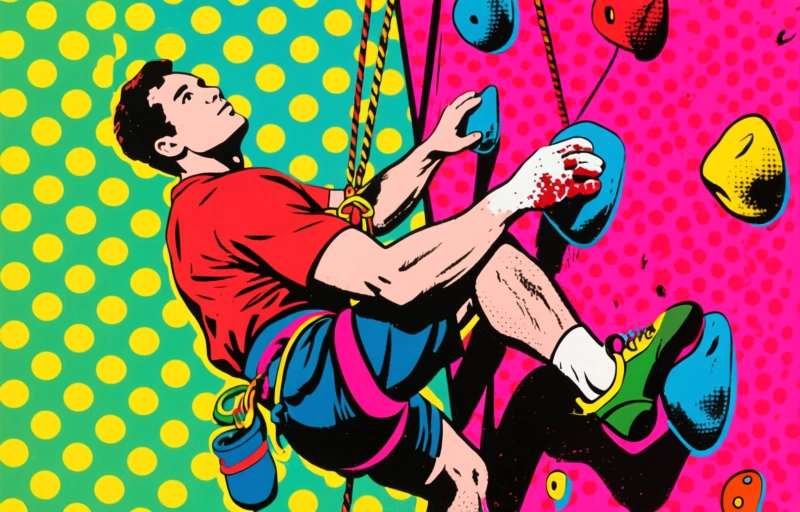
A routine sport climbing fall had a devastating outcome: a traumatic thumb amputation. We analyze the mechanics of this rare accident and what it means for climber safety beyond standard gear checks.
You know that feeling when you're climbing, and you take what seems like a perfectly normal fall? The rope catches you, you swing a bit, and everything feels routine. That's exactly what one climber thought too, until a simple slip resulted in a traumatic thumb amputation. It makes you pause, doesn't it? We're going to unpack what happened here, because understanding these rare but severe incidents is crucial for every climber who thinks they've seen it all.
This wasn't a case of equipment failure or a massive whipper. It was a sport climbing fall that, on the surface, looked utterly unremarkable. That's the most unsettling part. It challenges our basic assumptions about what's safe and what's dangerous on the wall. We often focus on the big, dramatic risks, but sometimes the threat hides in the mundane details we overlook every single session.
### The Mechanics of a "Simple" Fall Gone Wrong
So, how does a routine fall turn catastrophic? The climber was leading on a sport route. They fell, and the rope system did its job. The belayer caught the fall correctly. The issue wasn't with the core safety chain of rope, harness, and belay device. Instead, it was an interaction with the rock itself during the pendulum swing after the catch.
The climber's hand, specifically the thumb, got caught in a unique and terrible way. It wasn't a sharp edge that sliced it off. Think of it more like a high-force snag or pinch point. The momentum of the swing, combined with the position of the hand against a feature, created a perfect storm of forces. In a split second, the injury occurred. It highlights that the danger isn't always the fall itself, but what happens in those chaotic moments immediately after.
### What This Means for Your Safety Protocol
This story forces us to look beyond our standard checks. We're great at checking knots, harnesses, and belay devices. But we need to add a new layer of awareness. It's about spatial awareness during a fall. We can't control everything, but we can be mindful.
- **Awareness of Limb Placement:** Be conscious of where your hands and feet are as you climb, especially near features like cracks, horns, or fixed gear. A loose grip or an open hand might be safer than a jammed one if a fall is imminent.
- **Communication with Your Belayer:** A tight, smooth catch can minimize swing and pendulum. Talk with your belayer about fall dynamics on specific routes.
- **Mental Rehearsal:** Sometimes, looking at a route and thinking, "If I fall here, where will I swing?" can identify potential hazard zones before you even leave the ground.
As one experienced guide noted, "We train for the perfect fall, but rock climbing is messy. The real skill is managing the unpredictable."
### Moving Forward with Informed Confidence
The goal here isn't to scare you off the wall. Climbing is inherently risky, and we accept that. The goal is to build *informed* confidence. By dissecting incidents like this, we arm ourselves with knowledge. We stop thinking of falls as binary events—safe or unsafe—and start seeing them as complex physical scenarios with multiple phases.
Every time you tie in, you're making a risk assessment. This story adds a critical, though rare, data point to that assessment. It reminds us that vigilance is our most important piece of gear—one we never forget to put on. Keep climbing, keep pushing, but always keep thinking. Your awareness might just be the thing that keeps a strange, fluke accident from happening to you or your partner.