Times Square Subway Tragedy: Man Struck and Killed by Train
Felix Braun ·
Listen to this article~4 min
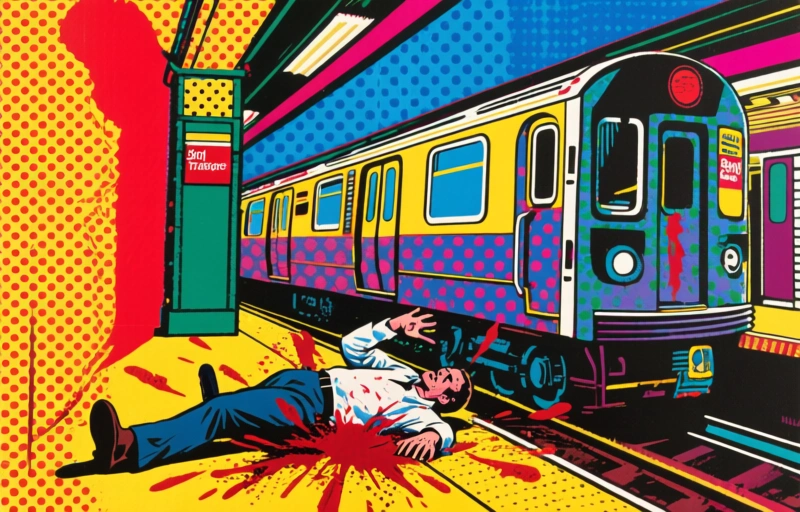
A tragic incident at Times Square station highlights critical subway platform safety. Understanding how these accidents happen and what commuters can do to stay safe.
It's the kind of news that stops you cold. A man on the Times Square subway platform was clipped by a train, dragged under its wheels, and killed. We're talking about one of the busiest transit hubs in the world. This isn't just a headline—it's a stark reminder of how quickly things can go wrong.
Let's break down what we know. These incidents are devastatingly sudden. One moment you're waiting for your train, the next, everything changes. The chaos of a major station, the crowds, the noise—it all creates an environment where a single misstep can have tragic consequences.
### Understanding Platform Safety
Platform safety isn't just about yellow lines and announcements. It's about situational awareness in a space that's constantly moving. Think about it—you're surrounded by hundreds of people, trains are coming and going, and there's always some distraction. Your phone pings, someone bumps into you, you're running late. It's in these moments that vigilance matters most.
We need to talk about the elephant in the room. How does someone get 'clipped' by a train? It often happens when someone is too close to the edge. Maybe they're leaning out to see if their train is coming. Perhaps they're distracted and take a step forward without looking. The train doesn't need to hit you directly—sometimes the air displacement alone can pull someone off balance.
### The Aftermath and Response
When something like this happens, the response is immediate and massive. Service halts. Emergency crews rush in. Thousands of commuters are stranded, their daily routines completely disrupted. But beyond the logistical nightmare, there's the human cost—a life lost, families shattered, and witnesses traumatized.
Here's what we should all remember when using busy subway systems:
- Stay behind the yellow line until your train has fully stopped
- Keep headphones at a volume where you can hear announcements
- Don't rush when trains are arriving or departing
- If you drop something on the tracks, never try to retrieve it yourself
- Be aware of your surroundings, not just your phone screen
It sounds simple, right? But in the hustle of daily life, these basics are often the first things we forget. We get complacent. We assume because we do it every day, nothing will go wrong.
### Moving Forward with Awareness
This tragedy forces us to confront uncomfortable questions about urban safety. Are there enough safety measures? Could better design prevent these accidents? What's the balance between efficient transit and passenger protection? There aren't easy answers, but the conversation needs to happen.
At the end of the day, subway safety is a shared responsibility. The transit authority maintains the infrastructure and runs the trains. But we, as passengers, have to do our part too. Stay alert. Look out for each other. If you see someone acting unsafely, say something to station staff.
As one transit worker once told me, 'We move millions safely every day, but it only takes one second for everything to change.' Let's honor that reality by being more present, more careful, and more aware the next time we're waiting on a platform.