Trump Explains Hand Bruise: Aspirin Link Sparks Discussion
Emily Taylor ·
Listen to this article~4 min
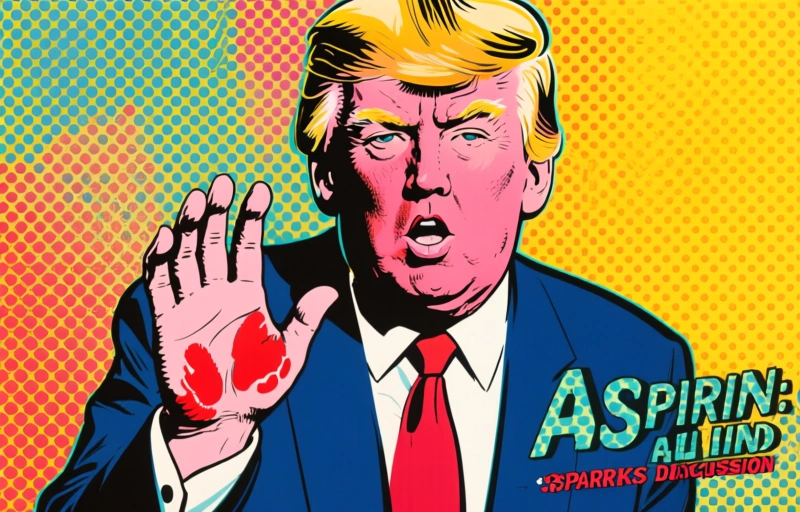
A brief comment from Donald Trump linking a hand bruise to aspirin use became a viral media moment. This analysis explores why such personal, mundane details resonate, how they spread, and what it means for public narrative and media analysis.
So, you've probably seen the clip by now. A quick moment during a public appearance where former President Donald Trump showed a bruise on his hand and attributed it to taking aspirin. It's one of those small, seemingly offhand remarks that can suddenly take on a life of its own in the media landscape.
For those of us tracking media narratives, it's a fascinating case study. A simple explanation for a minor physical mark becomes a talking point, analyzed and dissected across platforms. It shows how even the most casual comments from public figures are no longer just casual—they're content.
### Why This Small Detail Matters
You might be wondering, why focus on a bruise? It's not about the medical aspect, really. It's about the story. In today's 24/7 news cycle, everything is potential fodder. A leader mentioning a common medication like aspirin instantly connects on a human level. It's relatable. We've all had unexplained bruises, right?
But that relatability is precisely what makes it powerful. It frames the individual within an everyday context, breaking down the perceived barrier between public figure and private citizen. For communicators and analysts, observing how that frame is built—and how the public receives it—is the core of the work.
### The Anatomy of a Viral Moment
Let's break down how a moment like this travels. It rarely exists in isolation.
- **The Initial Spark:** The comment is made, often incidentally, during a larger event or interview.
- **The Clip:** A short, shareable video segment is extracted, perfect for social media and news highlights.
- **The Amplification:** News outlets and social platforms pick it up, often with their own spin or context.
- **The Discussion:** Analysts and the public begin interpreting the meaning, the subtext, and the implications.
It's a well-worn path now. The speed is breathtaking. What used to be a footnote in tomorrow's newspaper is now a trending topic within the hour.
### Reading Between the Lines of Public Health Messaging
There's another layer here, too. When a prominent person mentions a specific medication, even casually, it touches on public health communication. It's not an endorsement, of course, but it places that medication into the public conversation.
As one analyst recently noted, 'In the age of personal branding, every utterance is a data point. A mention of a common drug isn't just medical; it's a cultural reference, a point of shared experience.' This isn't about the pharmacology; it's about the shared language of everyday life becoming part of the political narrative.
### What This Means for Media Professionals
For those of us in clipping and media analysis, a snippet like this is a reminder. Our job isn't just to capture what was said. It's to understand the *why* behind the pickup and the *how* of its spread. What makes this particular detail stick when so much else is said?
Is it the simplicity? The vulnerability? The mundane becoming remarkable? Often, it's a combination. The human interest element—a very personal, minor health detail—cuts through the noise of policy debates and political rhetoric. It feels real in a way scripted speeches sometimes don't.
So next time you see a small, personal detail from a newsmaker go viral, take a second look. Don't just see the bruise or hear the aspirin mention. See the mechanism. See the public's desire to connect the monumental with the mundane. That's where the real story often lives, not in the grand pronouncements, but in the offhand remarks that somehow, against all odds, capture our collective attention.