Trump Explains His Latest Bruised Hand Incident
Emily Taylor ·
Listen to this article~4 min
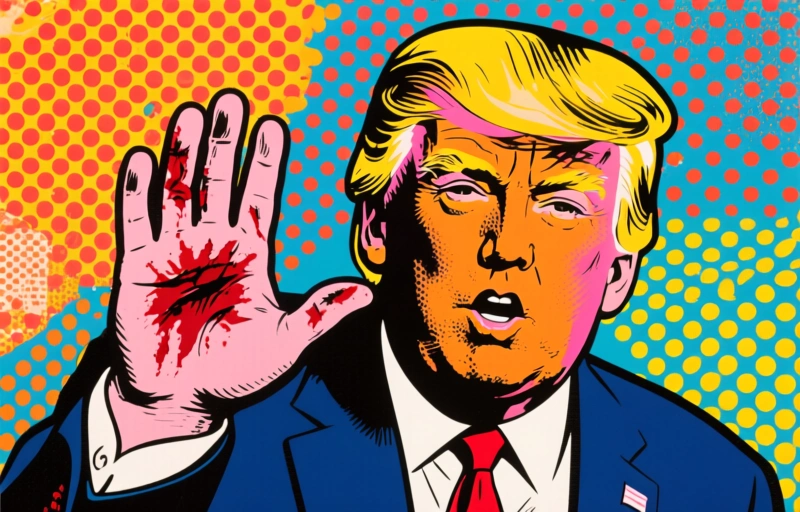
Donald Trump addresses the cause of his latest visible bruise, offering a medical explanation. For political analysts, such physical details are data points in assessing public perception and narrative control.
So, you've probably seen the headlines. Another bruised hand for Donald Trump. It's one of those recurring details that pops up, and honestly, it makes you wonder what's going on behind the scenes. The former president recently offered an explanation, and it's got people talking—not just about the bruise itself, but about what these small, physical details can sometimes signal in the high-stakes world of political analysis.
For professionals tracking political figures, these aren't just random bits of gossip. They're data points. A visible mark, a change in demeanor, a shift in schedule—it all gets logged, cross-referenced, and analyzed. It's part of building a complete picture. So when Trump addresses something like this directly, it's worth paying attention to the narrative he's crafting.
### What's Behind the Bruise?
According to Trump's own statement, the latest bruise is the result of a routine medical procedure. He described it as a simple blood draw. Now, on the surface, that seems straightforward enough. Millions of people get blood drawn every year. But in the context of a perpetual campaign and relentless public scrutiny, nothing is ever just simple.
The explanation aims to normalize the situation. It frames the bruise as an ordinary consequence of ordinary healthcare. For his supporters, it's a relatable moment. For analysts, it's a deliberate communication strategy—preempting speculation by providing a mundane, medical reason. The question becomes: does the explanation settle the matter, or does it open up other lines of inquiry about his health disclosures and public schedule?
### The Analyst's Perspective on Physical Cues
Let's take a step back. Why do we even care about a bruised hand? In our line of work, physical cues are part of a larger mosaic. We're not doctors diagnosing from afar. We're observers piecing together public information. Consistency in messaging matters. Changes in physical appearance can sometimes correlate with shifts in campaign energy, travel frequency, or even stress levels.
- **Timing is everything:** When did the bruise appear? What public events preceded or followed it?
- **Narrative control:** How quickly was an explanation offered? Who delivered it, and through what channel?
- **Public reaction:** Did the explanation satisfy the curiosity, or did it fuel further discussion?
These are the kinds of questions that run through an analyst's mind. It's less about the bruise and more about the ecosystem of information—and disinformation—that surrounds it.
### Reading Between the Lines in Political Communication
Trump's direct address of the issue is a classic move. It's a way to own the story. By providing a reason, he attempts to shut down what he might call 'fake news' or wild speculation before it spirals. He's effectively saying, 'It's this, nothing more.'
But in politics, especially today, every statement is dissected. The very act of explaining a minor bruise highlights how intensely every aspect of a candidate's life is examined. It reminds us that for public figures, the personal is always political. Their physical well-being is directly tied to perceptions of strength, vitality, and capability to lead.
As one seasoned strategist once noted off the record, 'In politics, you're not just managing policy; you're managing perception. Everything from a handshake to a haircut is part of the package.'
So, where does that leave us? With a bruised hand explained by a blood draw. Case closed? Perhaps. But for professionals in this space, the takeaway is broader. It's a perfect, small-case study in crisis management—even for a non-crisis. It shows how narratives are built, controlled, and sometimes contested, over the smallest of details. The real skill is knowing when a detail is just a detail, and when it's a piece of a much larger puzzle. And that's the daily work of cutting through the noise to find the signal.