Verstappen Masters F1's 'Clipping' Technique for New Cars
Felix Braun ·
Listen to this article~4 min
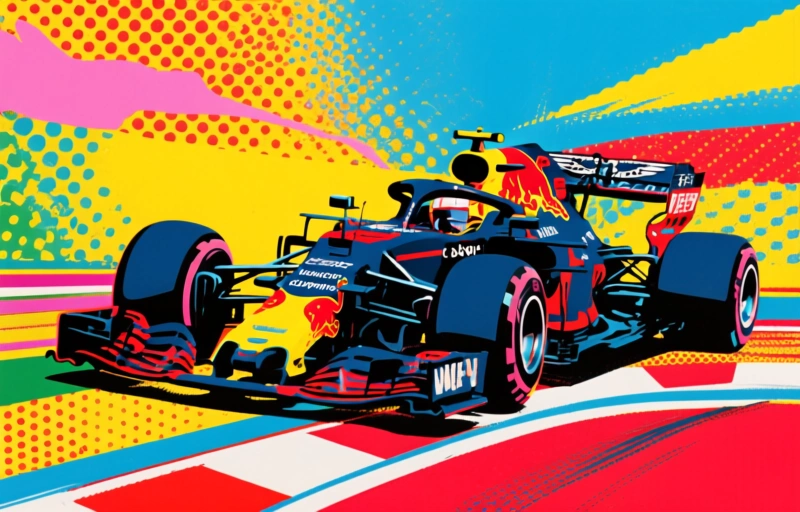
F1 analyst Ted Kravitz reveals Max Verstappen has perfected the 'clipping' technique essential for the new generation of ground-effect cars. This nuanced skill maximizes aerodynamic stability and could be a key performance differentiator.
Ted Kravitz, the insightful F1 analyst, has dropped a fascinating observation. He believes Max Verstappen has already perfected the 'clipping' technique that's becoming crucial for the latest generation of Formula 1 cars. It's one of those subtle skills that separates the great from the truly exceptional.
For those of us deep in the world of performance, this isn't just racing trivia. It's a masterclass in adaptation and technical precision. The new ground-effect aerodynamics have changed everything, demanding a different approach from the drivers. The old ways of attacking corners? They're being rewritten.
### What Exactly Is 'Clipping' in Modern F1?
Let's break it down simply. 'Clipping' refers to the driver's ability to perfectly trim the car's trajectory through a corner's apex. It's about minimizing the steering input and the car's lateral movement to keep the aerodynamic platform stable. Think of it as surgical precision versus aggressive carving.
With these new cars, the floor generates immense downforce when it's kept level and close to the track. Any sudden steering jerk or aggressive curb strike disrupts that airflow. The result is a instant loss of grip. Clipping is the art of avoiding that disruption entirely. It's smoothness redefined.
- **Aerodynamic Stability:** The primary goal is to maintain consistent downforce from the venturi tunnels under the car.
- **Minimized Steering Input:** Less sawing at the wheel means less energy going into the chassis and tires.
- **Apex Precision:** It's not about hitting the inside curb hard anymore; it's about grazing it perfectly.
- **Tire Management:** A smoother line naturally reduces tire scrub and wear over a race stint.
Kravitz's point is that Verstappen has internalized this need for a cleaner, more surgical approach. He's adapted his famously aggressive style to incorporate this new layer of finesse. It shows a driver at the peak of his craft, understanding that raw speed now comes from control, not just commitment.
### Why This Technique Is a Game-Changer
The shift to ground-effect cars was supposed to bring the field closer together. In some ways, it has. But it's also highlighted which drivers and teams can adapt fastest. A technique like clipping becomes a massive performance differentiator over a single lap and, more importantly, over a full race distance.
When you clip a corner correctly, you carry more minimum speed. You also exit cleaner, getting on the throttle earlier and harder. The cumulative effect over dozens of corners is huge. It's free lap time that doesn't show up as a dramatic moment on TV. It's in the data, in the tire temperatures, and ultimately, on the timing screen.
Other drivers are certainly working on it. Lewis Hamilton's feedback has been pivotal for Mercedes' development, and Charles Leclerc's natural feel is undeniable. But according to Kravitz's analysis, Verstappen seems to have a head start in making it second nature. He's turned a technical requirement into an instinct.
As one engineer noted, 'The best drivers make the complex look simple.' That's what we're seeing here. The 2026 regulations loom, promising another seismic shift. The teams and drivers who master these nuanced techniques now will have a foundational advantage for the next era. For professionals watching, Verstappen's mastery of clipping isn't just a story about one driver. It's a case study in the relentless evolution of elite performance, where the smallest details create the biggest gaps.