Verstappen Masters F1's New 'Clipping' Technique, Says…
Felix Braun ·
Listen to this article~4 min
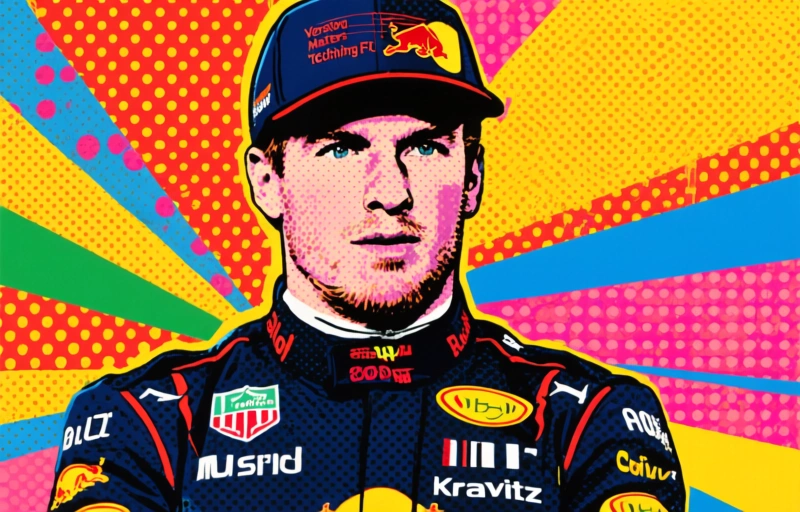
F1 analyst Ted Kravitz claims Max Verstappen has mastered the crucial 'clipping' technique for 2024's cars. This advanced throttle control could be a key factor in his dominance, setting a new benchmark for drivers and teams.
If you're following the 2024 Formula 1 season, you've heard the term 'clipping' thrown around a lot. It's not about editing videos or trimming hedges. In the high-stakes world of F1, it's a critical driving technique for the latest generation of cars. And according to veteran F1 analyst Ted Kravitz, reigning champion Max Verstappen has already perfected it.
That's a significant claim. It suggests one driver might have a head start in adapting to the evolving technical demands of the sport. Let's break down what this means and why it matters for professionals watching every lap.
### What Is 'Clipping' in Modern F1?
Think of it as surgical precision with the throttle. 'Clipping' refers to the driver's ability to momentarily lift off the accelerator at the exact right millisecond during cornering. This isn't a full brake or a clumsy correction. It's a feather-light touch that helps rotate the car, manage tire wear, and maintain optimal aerodynamic balance.
With the current ground-effect cars, maintaining a stable aerodynamic platform is everything. A smooth, clipped input keeps the floor sealed to the track, generating massive downforce. A jerky input can break that seal and cost precious tenths. It's the difference between flowing through a sequence and fighting the car.
Kravitz's observation points to Verstappen's seemingly innate feel for this balance. While others are still learning the new language of these cars, Max appears to be fluent.
### Why Verstappen's Adaptation Is a Game Changer
Verstappen's success isn't just about raw speed. It's about integration—melding man and machine into a single, efficient unit. Mastering clipping demonstrates a next-level understanding of the car's dynamics. Here's what that mastery likely translates to on track:
- **Consistent Lap Times:** Smother inputs mean more predictable tire degradation and better long-run pace.
- **Qualifying Edge:** Extracting that last 0.1% requires perfect harmony; clipping is part of that final tune.
- **Race Management:** It allows for more strategic tire and energy deployment, a key factor in today's strategic battles.
As one engineer put it recently, "The best drivers make the complex look simple. They communicate with the car in a whisper, not a shout." Verstappen's clipping technique seems to be exactly that—a quiet conversation where he's always one step ahead.
### The Technical Challenge for Other Teams and Drivers
This isn't just about driver skill. It feeds back into car development. If Verstappen and Red Bull have dialed in a setup that maximizes the benefit of this technique, it creates a moving target for rivals.
Their simulation models, feedback loops, and upgrade paths must now account for a driving style that leverages clipping. It adds another layer of complexity to the development race. Can other drivers adapt their style? Can teams modify car characteristics to suit it? These are the multi-million dollar questions facing the paddock.
For professionals analyzing performance, the focus shifts to telemetry traces. The story won't be in the headline lap time, but in the subtle shape of the throttle trace through high-speed corners like Copse at Silverstone or the Esses at Suzuka.
### Looking Ahead: The 'Clipping' Arms Race
Kravitz highlighting this so early in the season is telling. It signals that the benchmark has been set. The 2024 championship may well hinge on which team and driver can closest replicate or even improve upon this integrated approach.
Will we see a convergence of styles as others catch up? Or will Verstappen and Red Bull continue to refine their advantage, using this technique as a foundation for further innovation? One thing is clear: in Formula 1, standing still is moving backwards. The pursuit of perfection, one clipped corner at a time, is already underway.